URBinclusion final outcomes

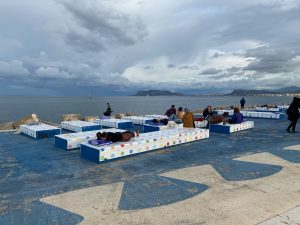
In August 2019 the URBACT Implementation Network URBinclusion closed its activities.Tesserae contributed with the Lead Expert Lorenzo Tripodi in delivering the final outcomes of this network of cities dedicated to combating poverty in deprived urban areas. URBinclusion was aimed at the co-creation of new solutions to reduce poverty in deprived urban areas, focusing on some key challenges to be tackled when going from the strategic to the implementation dimension: integrated approach and inter-departmental coordination, involvement of local stakeholders, monitoring and evaluation and financial innovation. Partners cities interchange showed that this requires integrated, cyclical and monitored processes made of recursive actions and feedbacks that produces stable conditions of engagement for continuous improvement. The main learnings of the knowledge exchange about implementing integrated actions have been summarised in the “URBinclusion Manifesto” and in a set of “Hint & Tips“.

Find more about the elaboration of the manifesto in this article by Lorenzo Tripodi and Anamaria Vrabie.

17 Set , 2019 - Category:

deprived neighbourhoods · urbact · URBinclusion


Related Posts

Report on the Culture and Social Inclusion in Cities Webinar

Report on the Culture and Social Inclusion in Cities Webinar

On November 29th, 2021, URBACT, together with EUROCITIES, organised the Culture and Social Inclusion in Cities webinar, bringing together cities and European networks and programmes to discuss and promote inclusive approaches to cultural policies in cities. The webinar showcased the results of the work carried out by URBACT and EUROCITIES within the framework of the […]

edu-city conference

edu-city conference

The EduCity conference looks at the potential of neighbourhoods as spaces for social engagement. It will present ideas and tools to explore the neighbourhood as an active site for mutual learning, innovation and capacity building. EduCity has a multidisciplinary and inclusive ambition and is open to researchers, practitioners, educators, civil servants and engaged citizens active in processes of social inclusion and community empowerment. The objective is to connect and provide tools to organisations and individuals who share an interest in the potential of neighbourhoods as learning environments.

OpenCCCP final conference

OpenCCCP final conference

The final international conference of the OpenCCCP Project will take place online on June 29 at 11 am to present the results of the last two years of work around community processes and heritage. It will include the round table Open Resources for Heritage Making  with the participation of Levente Polyak of Eutropian and Laura Colini of […]

Panoramica privacy

This website uses cookies so that we can provide you with the best user experience possible. Cookie information is stored in your browser and performs functions such as recognising you when you return to our website and helping our team to understand which sections of the website you find most interesting and useful.