Urban Reconnaissance Workshop at UNAM, Mexico City

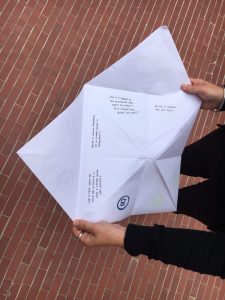
November 7-8 2018 we coordinated an URLab at the Facultad de Ciencias Políticas y Sociales, UNAM, in Mexico City. It was organised in the framework of the Cocreation exchange program, and involved a large number of participants, mostly postgraduate students and professors from different faculties and disciplines. The workshop developed in two days, divided in two sessions of two hours each. Participants had mostly post graduate level, coming from wide a range of disciplines and interests. Given the limited time and the great number of participants, the laboratory was mostly dedicated to introduce the methodology and develop a collective reflection on the general metropolitan (or rather megapolitan) identity of Mexico City. The outcomes of the discussion are in course of publication in the Urban Reconnaissance blog.
14 Nov , 2018 - Category:

cocreation · Mexico · urban reconnaissance · workshop


Related Posts

Integration of Migrants and Refugees in Small Territories – Brussels 25.06.2019

Integration of Migrants and Refugees in Small Territories – Brussels 25.06.2019

On 25 June 2019 Laura  Colini facilitated the panel Integration of Migrants and Refugees in Small Territories: A factor for local development at the European Committee of the Regions (CoR),  organised in partnership with the Organisation for Economic Cooperation and Development (OECD), the Council of Europe Development Bank (CEB), the International Catholic Migration Commission (ICMC), the […]

Stop deportation camp

From June 1st to June 6th 2023 groups of activists from Berlin & Brandenburg and more were camping together for workshops, panel talks and networking on how it is possible to resist the system of deportation. On June 5th a protest was held from the protest camp to the City Hall Schönefeld and then to […]

IN-HABIT Glossary

IN-HABIT Glossary

As part of our engagement in the Horizon 2020 funded Inclusive Health and Well-being in Small and Medium Sized Cities (IN-HABIT) project, we recently completed the delivery of the IN-HABIT Glossary. This glossary is the first section of the toolkit for stakeholder engagement with gender, diversity, equity and inclusion being developed by the project, which will be used […]