A vast majority on literature interested in citizens’ participation considers that a “deliberative wave” is crossing the planet in the last decade. “Deliberative minipublics”, “Citizens panels”, “citizens’ assemblies” and other devices are growingly being put in place in different parts of the planet (and a different scales of the administrative and political powers), especially for tackling issues related to ecological transition and environmental policies. Twenty years ago – when this wave was still not dominant – Iris Marion Young, in her seminal text “Activist Challenges to Deliberative Democracy.” (Political Theory 29/2001), severely criticized these devices, highlighting that they were artificial and cold instruments, that ignored the “repertoires of struggles” which characterize the fights of civil society for improving the intensity of democracy and the quality of policies and project of their representative institutions.
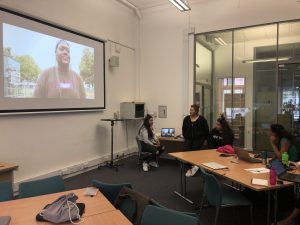
In this dialogue hosted by “Tesserae”, I would like to discuss with participants some challenges that the present struggles on environmental transition is posing to many existing participatory and deliberative processes – especially to those “invited spaces” organized by institutions for supporting and implementing policies in the domains of the energy transition, circular economy, sustainable food production and other important components of the European green Deal framework. I will move from the reflection of the last project that I am coordinating “PHOENIX: The Rise of Citizens’ Voices for a Greener Europe”, which is giving me the opportunity to discover new dimensions of citizens’ participation, and the so-called “deliberative processes” which are growing around the planet. Several questions will be debated with participants. Among them: what are the main structural and conjunctural limits of the most successful participatory and deliberative processes when FACING ENVIRONMENTAL TRANSITION? What are the main challenges that complex issues related to new green deal visions pose to best practices of participation elaborated in other thematic domains? How do deliberation techniques face the risk of dissipation of the socio-relational capital they create? Could certain “ideologies of participation” be softened by the use of hybrid methodologies? What is the place of technology and artificial intelligence in the most recent changes in the panorama of citizens’ participation and deliberation?

10/12/2021
Bio
Architect, planner and senior researcher at the Centre of Social Studies of Coimbra University, Giovanni Allegretti mainly researches on participatory processes and insurgent citizenship practices. He coordinates the European Project “PHOENIX: the Rise of Citizens’ Voices for a Greener Europe” in 10 countries. For the mandate 2014-2019 he was co-chair of the Independent Authority for the Guarantee and Promotion of Participation of Tuscany Region (Italy). As a consultant, he has been working in more than 50 countries for national regional and local governments and for international institutions as the UN, the World Bank, the Council of Europe, UCLG and several national cooperation agencies.
Link & Download