September 2021 marked completion of the first year of the INclusive Health And wellBeing In small and medium-size ciTies project, also known more simply as INHABIT. The project, which is part of the EU’s Horizon 2020 program and is planned to last five years in total, moved into a new phase in October, initiating activities in the cities of Cordoba (Spain), Riga (Latvia), Lucca (Italy), and Nitra (Slovakia), which will take the lead in testing visionary and integrated solutions to foster inclusive health and wellbeing. In each of the four pilot cities, the project will investigate how the mobilisation of existing undervalued resources, such as culture and heritage, food, human-animal bonds, and art and environment, might contribute to boosting health and wellbeing, with a focus on gender, diversity, equity, and inclusion (GDEI).
Read the official press release for the launch of the activities here.
This first year of IN-HABIT has been dedicated mostly to building effective partnerships, defining innovative approaches and procedures for implementing integrated solutions, training the Local Community Activators hired by the cities and setting up the local IN-HUBs – local resources dedicated in each city to steering the Public-Private-People Partnerships launched during recent weeks.
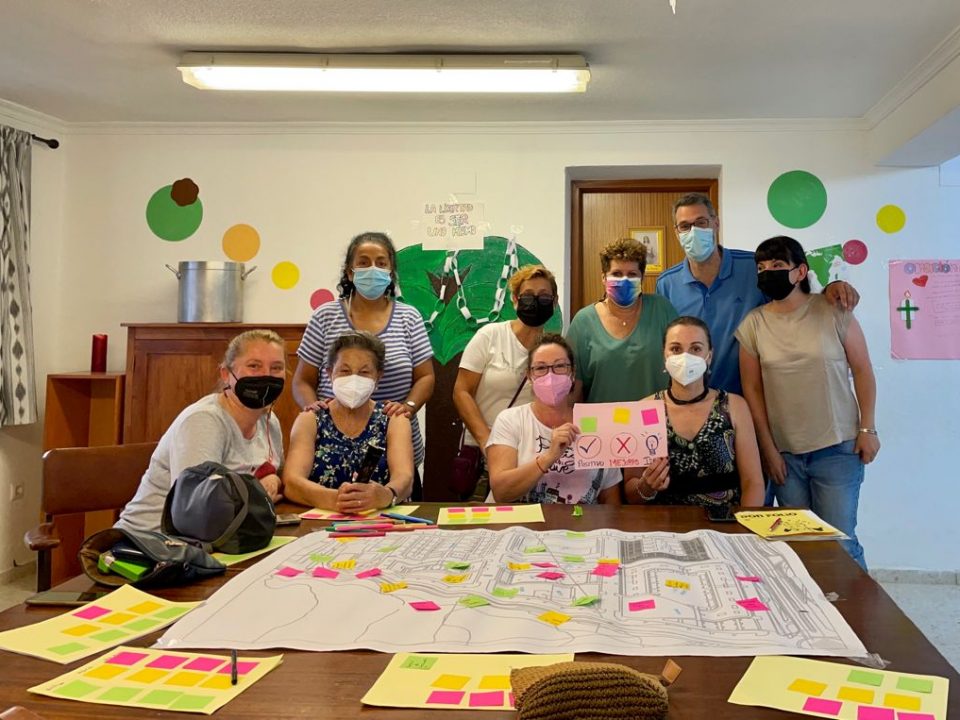
Tesserae has a central role in the project, leading work dedicated to the engagement of stakeholders with a focus on ender, diversity, equity and inclusion. For this, our central focus will be on providing the methodological framework for co-designing visionary integrated solutions, making transversal connections between regional activities and local community stakeholders, with support from partners including Design for Change, Bridge for Billions, The University of Reading, ISIMPACT and Lucca Crea.
Our contribution to INHABIT began with our co-production of a glossary for the project, to facilitate common understanding among the partners on the multiple terms and disciplinary approaches deployed in the large international partnership. We also recently delivered the Toolkit for Stakeholder Engagement with GDEI approach, which is a collection of methods, tools and templates to support the community activators in running the local IN-HUBS. The document includes contributions from various partners and is aimed at establishing a set of guidelines and resources which can then be tested through situated practices, and finally revised and published as part of the public delivery of the project.
For Tesserae this project marks a milestone in our story, providing us an important opportunity to collate, share and reflect upon an array of the tools and techniques we have developed over the years in the course of of our work, to integrate them with contributions from partners of the project, and to test them in a variety of concrete projects aimed at transforming local health and well being in in the EU.
Our next step will be to support the cities running the co-design workshops and to help them in producing their Inclusive Transformation Plans.
You can read more about the project and its advancements directly on the INHABIT website.