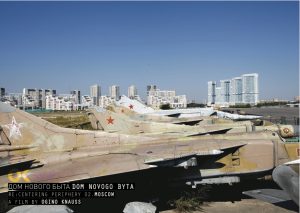

Last year we contributed to the cycle of conference organised by our partners of the Criticity collective in Florence. We are happy to present now the deriving publication.
Futuri Urbani is a project that began over a year ago and is now presented in the form of a book series. It is a process of critical reflection on the city, which began with a complete unawareness of the end point but which has been adamant from the outset about the need and urgency to adopt and renew a critical and transformative posture with respect to the condition of the contemporary city. What began as an inter-faculty seminar day, then became an online lecture series due to the restrictions imposed by the pandemic, and is now presented in three volumes entitled “hostile city”, “fragile city” and “living city”. The series “Futuri Urbani”, in which 27 contributions by people and organisations from different fields and disciplines are collected, should therefore not be considered as an end point but as a moment in a wider process in the making, in which both the aims and the ways of organising the dialogue can change and adapt to contingencies.

The three volumes refer to three clusters of reflection :
- the first collection of texts, “Citta Ostile” (Hostile City), offers a series of considerations on the meaning of the urban and on the physical and symbolic violence that the contemporary city undergoes and produces. The reader is offered different points of view through which to interpret the hostile forms of which the city is composed at various levels (symbolic, political, spatial, physical, etc.) and through which to imagine “possible” paths to follow.
- In “Città fragile” (Fragile City) the repercussions that the pandemic crisis has had on the city are examined in depth, on the one hand highlighting and radicalising socio-spatial injustices and inequalities, and on the other offering a serious opportunity to rethink housing models, of which this series is one of many attempts.
- The last of the volumes, “Città viva” (Living City), brings together contributions that speak of another way, once again “possible”, of understanding and experiencing the city, expressed in the numerous daily practices, in the spaces that live thanks to the activation of citizens, but also described by the forms of design innovation. An innovation in design capable of organising more sustainable, fairer and above all more humane perspectives of intervention, with a view to collaboration and participation in which the citizen no longer lives the condition of being only the recipient of interventions, but instead represents an active and indispensable co-agent at the various levels of design.
the volumes are in Italian. The digital version is downloadable form the Criticity website, the printed version can be pre-ordered and be delivered soon.