
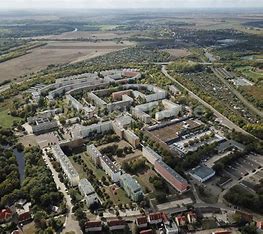
In 2012-1015 Laura Colini participated at IRS Leibnitz Institut in a research on Halle-Neustadt directed by Matthias Berndt and Daniel Först. This former East-German city has experienced two waves of privatization, leading to a complete change of ownership structures, marked by the rise of financial investors. Cuts have put increasing pressure on welfare recipients to live in […]

Starting from an urban gardening project, the experience of Prinzessinnengarten extended to a wide range of innovative practices, political stances and networking activities fostering a DIY integrated approach. Since 2020, the gardens occupy two distinct areas, both organized on principles of self-sufficiency, food-independence and social inclusivity: the original site located in Moritzplatz (Berlin-Kreuztberg) and the recent acquisition of San Jacobi cemetery (Berlin-Neukölln). The Prinzessinnengarten project promotes gardening as a practice of community building and social emancipation from urban neo-liberal dynamics, while also offering its visitors and members a wide range of cultural and educational activities aimed at sharing different forms of knowledge and skills and at raising consciousness on current ecological issues and social challenges.
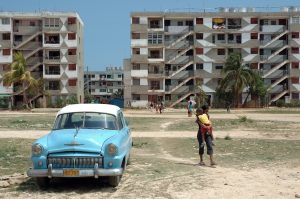
Alamar is a new city built in the 1970s in the outskirts of La Habana, Cuba, mostly with rudimental prefabricated technologies inherited from the soviets. It has been put in place through self-construction teams of 32 citizens employed in the so called microbrigadas: a system affecting not only the way the physical environment has been produced, but also the social texture formed in the process.