PIAZZA ILARIA ALPI-LATINA

A modern urban square part of the interventions of the Urban Innovative Action UPPER

In recent years, the committee, supported by the professional group “Young Architects Pontini”, has undertaken a participatory process that has actively involved both adults and children leading to the drafting of a design proposal for the redevelopment of the area, then donated to the City of Latina.Piazza Ilaria Alpi - UPPER LATINA
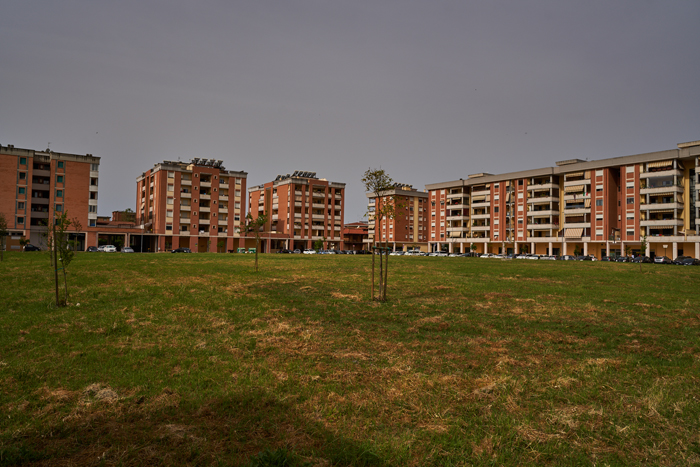
The design defines the organization of the space into different functional areas: a basketball court, a cavea for outdoor events, an area for dogs, a space for children , an area for outdoor sports, several green areas with lawns and trees…

The community led initiatives of the piazza are narrated by some protagonists in one of the UPPER stories realised by Tesserae during the Urban Innovative Action project.

LATINA_PIAZZA ILARIA ALPI from TESSERAE on Vimeo.
2 Dic , 2021 - Category:

Latina · NBS · public space · uia

Reasd more on the UPPER website  (In Italian)


Related Posts

MEHRINGPLATZ – SÜDLICHE FRIEDRICHSTADT

MEHRINGPLATZ – SÜDLICHE FRIEDRICHSTADT

Suffering from its marginalized position during the years of the German division, the neighborhood was recognized and labelled as a deprived area in 2005 due to its low standards of economic development, its poor social integration and quality of life. These characteristics made the territory of Südliche Friedrichstadt a periphery in the centre of Berlin, as the area is located in the proximity of some of the city’s main attractive spots, such as the lively Mitte and the creative Friedrichschain-Kreutzberg. In a twenty-year time-span, a set of policies of local urban renewal has been gradually implemented to re-centralize the neighborhood, starting from the very re-centralization of the role of its residents in directly participating in small decision-making processes. This served to acknowledge, create and institutionalize their identity as a geo-social collectivity. Commercial, leasure and creative initiatives have begun to flourish in the area, projecting it as an emblem of juxtapositions and contradictory tendencies characterizing modern urban contexts, whereby transitions to new lifestyles are mediated by old identites and latent risks of gentrification, displacement and social conflicts.

RAW-GELÄNDE FRIEDRICHSHAIN

RAW-GELÄNDE FRIEDRICHSHAIN

A Prussian railway workshop, a Cold War industrial wasteland, a contemporary socio-cultural center in the heart of Berlin Friedrichshain. The area is emblematic of collective and informal processes of creative transfomation reinventing Berlin’s urban landscape. The R.A.W. in Berlin-Friedrichshain was originally serving as a railway workshop in the XIX century. After being damaged during World War II and undergoing various transformations, it became a neglected wasteland in post-unification Berlin. In 1999, the RAW-Tempel association repurposed the site for artistic and cultural activities, aiming to create a vibrant hub for creativity and community engagement. In 2015, the Kurth Group acquired ownership of R.A.W. and recognized its potential for investment and urban development. Unlike other financial actors, the new owner aimed to respect the site’s identity and socio-cultural programs, giving long-term residents more control over their pre-existing properties. Establishing a participatory approach to urban planning, new plans for the R.A.W. Tower, a 100-meter-tall building, was set to be constructed starting in 2024. The project is intended to blend with older activities, integrating new offices, green areas, markets, and other services, with the R.A.W.’s role as a cultural institution. However, concerns about power dynamics and possible future compromises between top and bottom interests revolving around the R.A.W. might still challenge the current collaborations between the community and external investors.  

Die Lause

Die Lause

The former glass factory located in Lausitzer Straße 10/11 in Berlin-Kreutzberg is a domestic community that best embodies the prototype of the so-called “Berlin mix”, whereby available spaces are equally distributed to allow for both their residential and commercial use.