We are delighted to finally unveil our new online interface! We've been quietly working on reorganising our website in recent months, highlighting its role as an archive of what we produce rather than a promotional tool.
What you see here is a work in progress, as we are still revising and updating all of the entries made over the last nearly ten years, adapting them to a new format along with improving indicization and accessibility of contents.
You can now find updates and additional sections that have been planned for a long time. First, we developed two completely new sections: the first, Spotlight, is a collection of longer read format articles dedicated to themes that are central in our work. This section consists mainly of contributions from collaborators and visiting fellows who have spent time studying or working with us. This month features an excellent piece by Olenka Palomino on the topic of NBS.
The second novelty is the Events section, which to documents conferences, workshops and public events that we organised or significantly contributed to, including video recordings and proceedings published in a user friendly format. Another significant improvement is the section Tools, formerly titled Practices, which aims to provide access to the main methodological instruments and tools designed or adapted by Tesserae for fieldwork and participatory practice. This section is still very much in the making, but the objective is to transform it in an interactive toolset ready to use, including dowloadable manuals and templates.
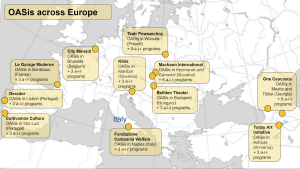
Last but not least, we are reorganising the section Places, beginning with updating the online map of our case studies. This is an atlas that collects and documents relevant locations where Tesserae’s researchers have developed knowledge and connections throughout time, permitting users to browse physically the organization’s activity and thematic foci. We’re working on expanding it with new links and stories!
In this moment we are also reorganising our social media presence, starting from retreating from X, that we had stopped to use since last year, and testing new environments, like Mastodon, Bluesky and Substack, together with maintaining our presence on LinkledIn. We look forward your interactions to help us identify the best and more fair channels to keep the conversation with our audiences alive.