
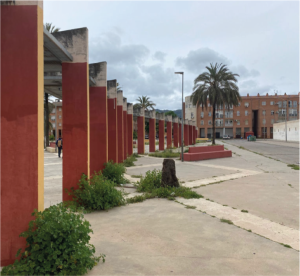
Las Palmeras is a residential neighborhood on the periphery of Córdoba, Andalusia, built in the 1980s and 90s. Recognized as the fourth most deprived neighborhood in Spain, Las Palmeras has struggled over 50 years with high levels of socioeconomic disadvantage.
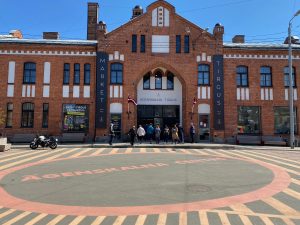
The Āgenskalns Market is case of regeneration of an old market structure in Riga done through a Private Public People Partnership. The building has been leased to a local company active in the neighbourhood, and the INHABIT Horizon 2020 provided additional resources to expand the social dimension of the project. Tesserae has trained the Local Community Activators and supported the participatory aspects and the engagement of stakeholders.
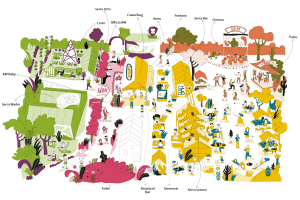
Since 2014, in the heart of the Giardini Margherita park in the city of Bologna 500 m² of abandoned greenhouses and 3000 m² of open-air area have been the subject of an incremental regeneration process that has given rise to Le Serre dei Giardini, a veritable ‘nursery’ of ideas: here desirable, sustainable and inclusive futures are brought closer to people through the realisation of tangible projects that propose a rethinking of the relationship between urban space, human beings and the natural environment.